
halcyon house

a worker owned cooperative holistic wellness center

Author: Robin Davidson

  • What are fight or flight muscles?

    What are fight or flight muscles?

    These are muscles that activate when we are in a sympathetic reaction (fight or flight). This can be in reaction to something in our environment that doesn’t feel safe, something happening internally (a physical stressor) or in our mind (stress).

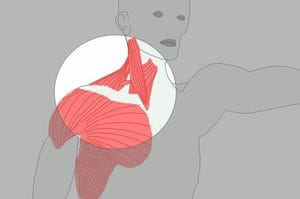
    One of these muscles is the Psoas. This muscle does several actions that support us in fight or flight. It helps lift our knees up to run (flight) or defends our core (fight). If these muscles activate and then turn off again, we might not feel any consequences. It’s when these muscles turn on and stay on that we will notice symptoms. These could include hip pain, back pain, restricted breathing, fatigue and nervous system dysregulation (anxiousness, depression).

    The tightness of the psoas muscle will also be increased with prolonged sitting.

    The Halcyon House staff have many practices/treatments that will support you in releasing tension in the psoas:

    • Acupuncture
    • Massage
    • Craniosacral therapy
    • Somatic based movement/yoga
  • Wellness Access Initiative

    The Halcyon House Wellness Access Initiative is a community funded program to help offset the costs of our services for the people who need them the most. Selection for the program is based on financial need, physical need, treatment goals, and recommended individualised treatment plan from our staff. We believe that the wellness services we provide are beneficial and even a potentially necessary part of healing and well-being. It is our hope that this wellness subsidy initiative will provide an avenue for access to our services for people who would otherwise not have the resources to afford them.

    Selection Process

    Applicants will fill out an online application to collect information about financial need, physical limitations/impairments and how their individual situation interferes with daily life.  They will also have at least one session or consultation with one (or more) of the Halcyon Wellness Team, who will report on their need for services, create a treatment plan that includes goals, frequency, services, and duration. This de-identified information will be provided to the selection committee for final approval. 

    Would you like to be involved in the selection committee? Apply here.

    If you would like to support the Wellness Access Initiative, donations can be made at the front desk or online.

  • Difficult times

    Difficult times

    During these difficult times, I’m often asked “how are you dealing with this”.

    My answer is “it’s not easy!”

    Here are some things that I have been practicing:

    • Stay informed but limit the time that I’m taking in (digesting) information/news. I’m listening to a trusted news source (for me it’s MPR) in the morning and evening for 30 minutes.
    • Allowing myself to feel the emotions that arise (not pushing them away). Anger, sadness, fear, all of it.
    • Prioritizing self care and nervous system regulation. It’s important for me to stay grounded in the practices that support me. I focus on grounding practices such as such as extended exhale breathing, using weighted lap blanket, and focus on pressing into the earth.
    • Find glimmers in daily life. Glimmers are moments of ventral vagal connection. They can be things like noticing the lake shimmering on a sunny day, feeling the freedom of skiing down a wodded hill, or burying my face in my dog’s curly fur.
    • Find and spread hope. Notice when you see people acting kindly and showing compassion. In return, I will create opportunities in my day to give back and connect with others.
  • Holidays

    Holidays

    Now that the holidays are past and we’re moving into a new year, I’m excited about a new workshop that Sara Shepard and I are planning.  It is called the Art of Wintering Well. We are taking our love of the nervous and sensory systems and combining them with a Danish practice of Hygge. We will present this information in a relaxing, fun, and interactive way.

    Halcyon House itself has a lot of Hygge going on and we will use this to help you experience the beauty of the practice. We hope to see you soon!

    A poster for The Art of Wintering Well - a workshop series, a winter holiday themed series of classes to make the most of the winter season.
  • What is neuro-regulation?

    What is neuro-regulation?

    Neuro-regulation is using different tools to modulate your nervous system.

    How do we know that we are in a fight or flight (sympathetic) nervous system?

    • Rapid heart rate
    • Shallow and/or rapid breathing
    • Chest breathing
    • Poor digestion/elimination
    • Tense muscles
    • Scattered/unfocused thoughts
    • Decreased memory
    • Angry or agitated emotions
    • Feelings of wanting to run away/escape

    What are some tools we can use to move our nervous system toward more ease?

    • Diaphragmatic (belly) breathing. Think low (in the body) and slow. Subtle/smooth.
    • Extended exhale breathing. Breath in through the nose and slowly out through pursed lips.
    • Gentle movement (like yoga or stretching). Especially twists!
    • Rocking or swaying.
    • Calming music, lighting, smells.
    • Relaxation using guided apps such as “Insight timer”
    • Grounding: feeling your body on the chair, bed, or floor.
  • What is craniosacral therapy?

    What is craniosacral therapy?

    We’ve been asked this question many times since I began offering this service at Halcyon House. Here’s a brief description of a very nuanced therapy:

    It is a hands-on technique that was developed by Dr. John Upledger (Osteopath) in the 1980’s while working at the University of Michigan. He explored the nervous system

    connection from the brain through the spinal cord (cranium to sacrum). This connection was through a connective tissue covering called dura mater and cerebral spinal fluid that flowed inside it. He discovered that by moving the bony parts of the system, it allows the

    fluid to move more freely. He found that you can feel this as a physiological rhythm. This craniosacral rhythm can be felt through the practitioner’s hands with very light touch.


    What can someone expect when having a craniosacral therapy session?

    • Lying in a comfortable position on a massage table with clothes on
    • Very light touch in different parts of your body to assess
    • Focused attention to areas of the body that present with restriction
    • You might feel physical or emotional responses during and after the session
    • A return of your system to homeostasis (general health/well-being)
    • Relaxation

    Typically, I will recommend sessions every 2-4 weeks for 4 sessions to assess the effectiveness. You should notice progression/improvement over this time. I will also provide you with additional practices that you can do between sessions to support this progress.

    Interested in a session?

  • Pursed Lips Breathing

    Pursed Lips Breathing

    When we are relaxed and comfortable (parasympathetic), we optimally use diaphragmatic breathing (see previous post). However, there are important breathing practices that we can use to calm a heightened nervous system. You might experience a heightened (sympathetic) nervous system with any of the following: anxiety, agitation, racing heart rate, rapid/shallow breathing, distracted mind, tense muscles, digestive issues, and many more.

    Try pursed lip or extended exhale breathing.

    This involves breathing comfortably in through the nose then slowly breathing out through pursed lips. You might imagine that you are blowing a candle flame but not blowing it out. Another option is to blow out through a straw. The long slow exhale calms your nervous system. Do this until you feel a shift in the area that you noticed. Also, discontinue this practice if you notice light headedness or increase in symptoms.

  • Vagus Nerve

    Vagus Nerve

    What is the vagus nerve and how does it work with your nervous system?

    The vagus nerve is a cranial nerve that travels from the brain stem, into the neck, chest, and abdomen. Its main function is to provide the nervous system with information about how we are doing. If we use a car analogy, it is the brake of our nervous system.

    The primary practice that I use to affect the vagus nerve and calm the nervous system is diaphragmatic breathing. Put one hand on your chest and the other one on your abdomen to feel where you are breathing. Ideally we want to decrease or still the movement under the hand on the chest. Under the hand on the abdomen, feel the rising and expansion as you inhale and an inward release on the exhale.