
halcyon house

a worker owned cooperative holistic wellness center

Category: Education

  • What are fight or flight muscles?

    What are fight or flight muscles?

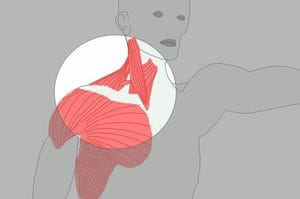
    These are muscles that activate when we are in a sympathetic reaction (fight or flight). This can be in reaction to something in our environment that doesn’t feel safe, something happening internally (a physical stressor) or in our mind (stress).

    One of these muscles is the Psoas. This muscle does several actions that support us in fight or flight. It helps lift our knees up to run (flight) or defends our core (fight). If these muscles activate and then turn off again, we might not feel any consequences. It’s when these muscles turn on and stay on that we will notice symptoms. These could include hip pain, back pain, restricted breathing, fatigue and nervous system dysregulation (anxiousness, depression).

    The tightness of the psoas muscle will also be increased with prolonged sitting.

    The Halcyon House staff have many practices/treatments that will support you in releasing tension in the psoas:

    • Acupuncture
    • Massage
    • Craniosacral therapy
    • Somatic based movement/yoga
  • Our bodies are truly amazing

    Our bodies are truly amazing

    Ready for some massage education?

    Every time I do a deep dive into a system I thought I knew well, I am reminded of the subtleties of how everything works together in a beautiful symphony. This is especially true of the pericardium. In Traditional Chinese Medicine it is sometimes referred to as the Heart Protector and indeed it does that job well.

    Recently, when Jakki needled my PC-6 acupuncture point, I felt a surge of energy shoot out of my middle finger, right where the meridian is mapped in the acupuncture charts. 

    But my practice is all about the fascia, so I started studying more about how the pericardium works, and how it is designed.

    The pericardium is:

    • a ball of dense fascia,
    • a thin layer of fluid,
    • and a soft inner ball with the heart suspended inside the soft inner ball.

    The outer ball has a facial connection into the top of the diaphragm. Both the diaphragm and the pericardium are innervated with vagus nerve attachments, further pointing to their importance in nervous system regulation. 

    Visualize:

    Every inhale is by design tugging on pericardium and pulling it gently downward. Every exhale releases it back to its neutral position. When we bypass primary diaphragmatic breathing for secondary thoracic breathing, we are stalling this natural rhythmic pulsing of the fluid surrounding the heart. If this function was not very important, the pericardium would not be connected to the diaphragm, as there are plenty of other anchor points available inside of the rib cage. 

    I have been imagining my pericardium is a jellyfish, with every downward movement of my diaphragm on the inhale gently tugging the jellyfish downward. Each exhale releases the diaphragm and allows the jellyfish to float upwards. Every breath soft and gentle moves my imaginary jellyfish up and down in my internal ocean. Just a few minutes of this breath imagery can really calm my spirit. 

    The more I learn about the body, the better I understand the systems within, and the better I can provide massage education to my clients or anyone who will listen!

  • Did you know your body has a balance system?

    Did you know your body has a balance system?

    What is our balance system?

    One of our eight senses is the vestibular system — our inner sense of balance and movement. It helps us know where we are in space, keeps us upright, and supports coordination, focus, and emotional regulation.

    Here in the Northland, April is all about the thaw, the gentle ending of our winter reset. Ice loosens, snow melts, and the ground shifts beneath our feet. Wind moves through bare trees. The weather is unsteady and unpredictable — and sometimes we feel that way too. When we intentionally notice gentle movement — slow walks on uneven ground, swaying branches, rocking, stretching, or simply lifting your face to the sunshine and feeling the ground beneath your feet, we give our balance system a chance to recalibrate and reconnect after winter’s stillness.

    This month, move with awareness. Your nervous system is waking up with the season — and steady, intentional movement can help you find your footing again.

  • Difficult times

    Difficult times

    During these difficult times, I’m often asked “how are you dealing with this”.

    My answer is “it’s not easy!”

    Here are some things that I have been practicing:

    • Stay informed but limit the time that I’m taking in (digesting) information/news. I’m listening to a trusted news source (for me it’s MPR) in the morning and evening for 30 minutes.
    • Allowing myself to feel the emotions that arise (not pushing them away). Anger, sadness, fear, all of it.
    • Prioritizing self care and nervous system regulation. It’s important for me to stay grounded in the practices that support me. I focus on grounding practices such as such as extended exhale breathing, using weighted lap blanket, and focus on pressing into the earth.
    • Find glimmers in daily life. Glimmers are moments of ventral vagal connection. They can be things like noticing the lake shimmering on a sunny day, feeling the freedom of skiing down a wodded hill, or burying my face in my dog’s curly fur.
    • Find and spread hope. Notice when you see people acting kindly and showing compassion. In return, I will create opportunities in my day to give back and connect with others.
  • Holidays

    Holidays

    Now that the holidays are past and we’re moving into a new year, I’m excited about a new workshop that Sara Shepard and I are planning.  It is called the Art of Wintering Well. We are taking our love of the nervous and sensory systems and combining them with a Danish practice of Hygge. We will present this information in a relaxing, fun, and interactive way.

    Halcyon House itself has a lot of Hygge going on and we will use this to help you experience the beauty of the practice. We hope to see you soon!

    A poster for The Art of Wintering Well - a workshop series, a winter holiday themed series of classes to make the most of the winter season.
  • What is neuro-regulation?

    What is neuro-regulation?

    Neuro-regulation is using different tools to modulate your nervous system.

    How do we know that we are in a fight or flight (sympathetic) nervous system?

    • Rapid heart rate
    • Shallow and/or rapid breathing
    • Chest breathing
    • Poor digestion/elimination
    • Tense muscles
    • Scattered/unfocused thoughts
    • Decreased memory
    • Angry or agitated emotions
    • Feelings of wanting to run away/escape

    What are some tools we can use to move our nervous system toward more ease?

    • Diaphragmatic (belly) breathing. Think low (in the body) and slow. Subtle/smooth.
    • Extended exhale breathing. Breath in through the nose and slowly out through pursed lips.
    • Gentle movement (like yoga or stretching). Especially twists!
    • Rocking or swaying.
    • Calming music, lighting, smells.
    • Relaxation using guided apps such as “Insight timer”
    • Grounding: feeling your body on the chair, bed, or floor.
  • Winter Digestive Cleanse

    Winter Digestive Cleanse

    Winter digestive cleansing is something that many people want to do to start the new year fresh. The tendency is to want to juice fast; however, in the winter that is very hard on the body—especially in Northern Minnesota. My suggestion has always been to do a kitchari cleanse to give your digestion a rest while nourishing your body in a gentle way. Kitchari is an Ayurvedic Indian recipe that uses split lentils and rice to make a complete protein. Spices are balanced between all five tastes: sweet, spicy, salty, pungent, and sour. If you are feeling the desire to fast this winter, try kitchari cleansing. Here is a great recipe to get you started: Kitchari Recipe 

  • TCM warming broth

    TCM warming broth

    Cold and cough season has arrived. In Traditional Chinese Medicine, the lungs, which open to the nose and mouth through the respiratory passages, are considered the most delicate of the five yin organs and the easiest for external influences to affect. These external factors are described as six types: 

    • Wind
    • Cold
    • Dampness
    • Dryness
    • Heat
    • Fire

    Coughs are most often linked to Wind, though Wind frequently combines with other influences such as Cold, Heat, or Dryness, depending on seasonal conditions. Wind enters from the back of the neck and ankles. Wrap up in a scarf or buff to keep your neck ‘wind gate’ covered!


    Here is a quick and easy recipe to nip that cold in the bud:

    • 1 green onion, white portion, thinly sliced
    • 1 clove of garlic, sliced thinly
    • 1-2 thin slices of fresh ginger, unpeeled
    • 1 to 1.5 cups of bone broth or water

    Bring the water or broth to a boil, add ingredients and turn down to a simmer after a few minutes. Strain and cool a few minutes to a comfortable temperature. Serve in a mug or bowl.

    This may induce a slight sweat which helps expel dis-ease from the body. Snuggle up in some blankets, but if you feel damp rinse off and put on dry clothes.

  • What is craniosacral therapy?

    What is craniosacral therapy?

    We’ve been asked this question many times since I began offering this service at Halcyon House. Here’s a brief description of a very nuanced therapy:

    It is a hands-on technique that was developed by Dr. John Upledger (Osteopath) in the 1980’s while working at the University of Michigan. He explored the nervous system

    connection from the brain through the spinal cord (cranium to sacrum). This connection was through a connective tissue covering called dura mater and cerebral spinal fluid that flowed inside it. He discovered that by moving the bony parts of the system, it allows the

    fluid to move more freely. He found that you can feel this as a physiological rhythm. This craniosacral rhythm can be felt through the practitioner’s hands with very light touch.


    What can someone expect when having a craniosacral therapy session?

    • Lying in a comfortable position on a massage table with clothes on
    • Very light touch in different parts of your body to assess
    • Focused attention to areas of the body that present with restriction
    • You might feel physical or emotional responses during and after the session
    • A return of your system to homeostasis (general health/well-being)
    • Relaxation

    Typically, I will recommend sessions every 2-4 weeks for 4 sessions to assess the effectiveness. You should notice progression/improvement over this time. I will also provide you with additional practices that you can do between sessions to support this progress.

    Interested in a session?

  • Staying present

    Staying present

    Staying present in the now is one of this life’s greatest challenges.  Over the years I have practiced many different meditations, breathing techniques, etc. to overcome the overwhelming desire to be anywhere but this present moment. There are a few that I always end up coming back to because they work for me.  In the energy class that I am teaching on Wednesdays, you will learn one of the techniques that I have been practicing and playing with for 25 years. My intention for this class is to share something that works for me with this community. As with all meditations it is simple, but not always easy. It involves working with the imagination and that doesn’t work for everyone. It’s ok, there isn’t a single meditation, or exercise, or hobby that works for everyone. The fun challenge is finding what centers you, brings you joy, and motivates you to action in co-creating your experience here. So run, sit, paint, meditate, sip tea and contemplate the universe, just do it with the presence of now.