halcyon house

a worker owned cooperative holistic wellness center

Category: Wellness

  • MCCD

    MCCD

    A different kind of wellness we are hoping to spread is one of shared ownership, cooperation,  and democracy in the workplace.

    When we set out to form Halcyon House, we wanted to implement some of the ideas we had been talking about for a long time.  Did we know how to set up a worker owned cooperative? No. We needed help and were lucky to find resources and people to guide us along the way. One organization that has been so patient in answering our many questions is Minnesota Consortium of Community Developers. 

    Every once in a while, we might share some updates on our cooperative development and fellow cooperators in the area. If you are interested in finding out more, come ask! We’d love to share.

  • Pursed Lips Breathing

    Pursed Lips Breathing

    When we are relaxed and comfortable (parasympathetic), we optimally use diaphragmatic breathing (see previous post). However, there are important breathing practices that we can use to calm a heightened nervous system. You might experience a heightened (sympathetic) nervous system with any of the following: anxiety, agitation, racing heart rate, rapid/shallow breathing, distracted mind, tense muscles, digestive issues, and many more.

    Try pursed lip or extended exhale breathing.

    This involves breathing comfortably in through the nose then slowly breathing out through pursed lips. You might imagine that you are blowing a candle flame but not blowing it out. Another option is to blow out through a straw. The long slow exhale calms your nervous system. Do this until you feel a shift in the area that you noticed. Also, discontinue this practice if you notice light headedness or increase in symptoms.

  • Breath

    Breath

    Well-being begins and ends with the breath. That may sound esoteric to some, but it is the driving force behind how your parasympathetic nervous system works to relax you after a period of stress. Relaxed, deep breathing with a focus on an extended and soft exhalation will help you regain control of what is known as the Deep Front Myofascial Meridian (I also refer to is as the fight, flight line, the pregnancy line, and the skeleton stabilizer line) in which the diaphragm plays a major role in regulating. Disfunction in this structural foundation of the body can lead to the secondary breathing muscles in the neck get turned into the primary breathers, leading to and/or caused by: chronic stress, chronic pain, anxiety, PTSD, head/neck injuries, digestive issues, carpal tunnel, headaches, migraines, and more. When the diaphragm gets stuck the brain gets worried and sends all sorts of signals and hormones out to try to win the real or perceived battle for survival.


    Try this breathing exercise to help regain control of your natural breathing cycle.

    • Lay on the floor with your knees bent and hip width apart. Tuck the tail bone slightly moving it away from your head to flatten the lower back then send it up toward you to arch the low back. Now find the middle space and relax into that position.
    • Next imagine, but don’t actually move, that someone has placed a flower on both shoulders from behind and to smell them you would need to turn your head to the side with your inhale, and return to center on the exhale. Imagine “smelling” the flower on each shoulder with your inhale, returning to center on your exhale.  Don’t try to change anything, just focus on the visualization of smelling the flower, first on one side, then on the other side, resting in the center after each exhale brings your awareness back to neutral.
    • After a few breaths stop the visualization and just follow your natural breath in and out, not forcing anything just breathing in to the first natural stopping point, pausing briefly and letting the breath fall back out as your diaphragm relaxes and pushes the air out. If you are able to get here and it feels good, revel it the simplistic beauty of your breath and enjoy this practice to help recenter yourself, physically, spiritually, and emotionally.
    • If this practice is hard, makes you uncomfortable, you notice that one side isn’t working no matter how hard you try, or causes nausea, pain, or panic then you might need some help to restore balance and return the breath to its natural rhythm. Robin and/or Jennifer can help with bodywork techniques at Halcyon House or schedule an acupuncture session with Jakkie for a Traditional Chinese Medicine approach to rebalance the lungs and breath.

  • Cupping

    Cupping

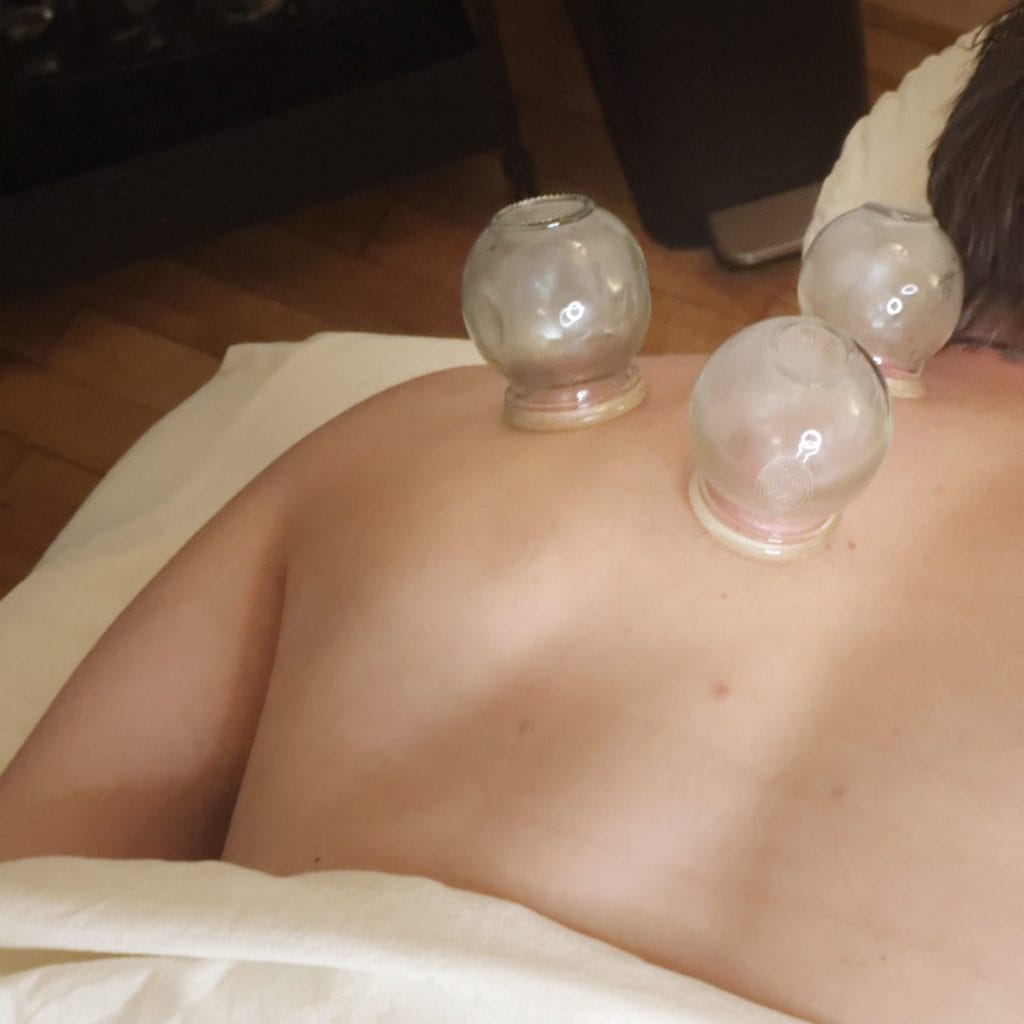
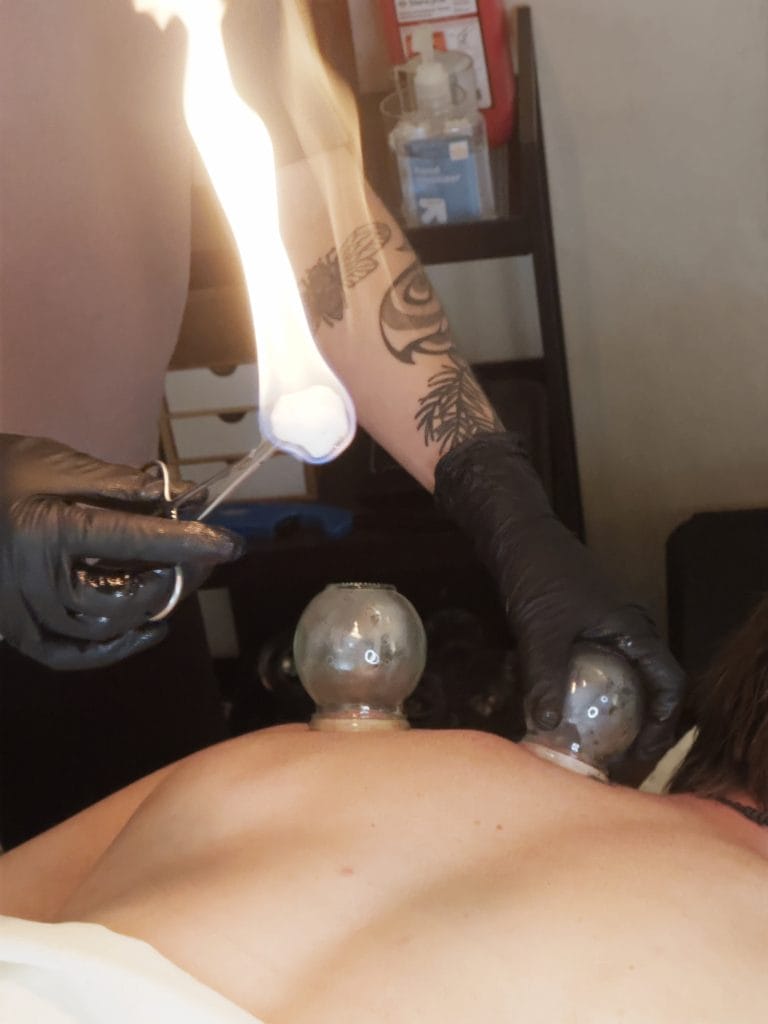
    Cupping is often described as the inverse of massage. Instead of applying pressure to push muscles down, it uses gentle suction to lift them upward. This technique is considered one of the most effective deep-tissue therapies, with effects believed to reach up to four inches beneath the skin. Within this depth, toxins may be released, blockages cleared, and circulation in veins and arteries revitalized.

    While cupping is often paired with acupuncture in a single session, it can also be used on its own. The suction and negative pressure help loosen tight muscles, improve blood flow, and calm the nervous system. Practitioners use cupping to address a variety of concerns.These include back and neck pain, stiff muscles, migraines, fatigue, rheumatism, anxiety, and even the appearance of cellulite.

    More benefits of Chinese cupping for the lungs include clearing congestion from a common cold or to help control a person’s asthma. In fact, respiratory conditions are one of the most common maladies that cupping is used to relieve.

  • Vagus Nerve

    Vagus Nerve

    What is the vagus nerve and how does it work with your nervous system?

    The vagus nerve is a cranial nerve that travels from the brain stem, into the neck, chest, and abdomen. Its main function is to provide the nervous system with information about how we are doing. If we use a car analogy, it is the brake of our nervous system.

    The primary practice that I use to affect the vagus nerve and calm the nervous system is diaphragmatic breathing. Put one hand on your chest and the other one on your abdomen to feel where you are breathing. Ideally we want to decrease or still the movement under the hand on the chest. Under the hand on the abdomen, feel the rising and expansion as you inhale and an inward release on the exhale.

  • Drink and eat your electrolytes!

    Drink and eat your electrolytes!

    When the weather heats up and we sweat more, we tend to rehydrate with plain water. While this generally a good practice, it is also good to remember to replace the minerals that were lost with sweat and flushed out with our increase in water consumption. This gives the kidneys a break and also keeps your muscles from cramping up.


    My favorite way to rebalance:

    My favorite way to rebalance is with a nice bowl of miso ramen (or soba). I start with homemade bone or veggie broth, grate in ginger, finely sliced Brussel’s sprout (just one), one or two sliced shitake mushrooms, a dash of soy sauce, and a dash of rice vinegar. Add a tablespoon of miso paste in at the end. Delicious and nourishing and comes together very quickly for days when heating up the kitchen seems like a terrible idea.

    Alternatively, muddle some mint into a lemon or limeade and add a pinch of sea salt; sprinkle a tiny bit of sea salt on your watermelon; eat a crunchy whole pickle. There are a ton of fun ways to rehydrate with food and fresh fruit in the summer when everything is so fresh! Get those electrolytes!

  • Acupuncture at Halcyon House

    Acupuncture at Halcyon House

    Licensed Acupuncturist Jakki Overby

    Whether you’re new to acupuncture or a longtime believer in its benefits, we’re excited to have you here. If you are looking for professional acupuncture in Duluth, MN, you’ve found the right place.

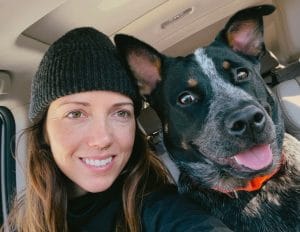
    Jakki Overby with her dog, Wylie, are inside a car.

    Acupuncture, an essential component of Traditional Chinese Medicine, has been used for thousands of years to restore balance, reduce pain, and support overall health – naturally and holistically.

    Primarily, acupuncture is widely used for pain relief. People often turn to it for chronic back and neck pain, arthritis, headaches, migraines, and even post-surgical discomfort. Its ability to reduce inflammation and improve circulation can offer lasting relief where other treatments fall short.

    If you’re interested but not sure if acupuncture is right for you, schedule a free consultation.